

Ayurveda for Emotional Balance Daily Practices for Calm Mind and Well Being

Some emotions arrive like weather. A sudden flash of anger, a heavy fog of sadness, a restless loop of worry, or a sharp wave of fear can change the whole mood of a day. Emotional regulation does not mean suppressing these feelings. It means learning how to notice them, understand them, and respond with steadiness.
Ayurveda, India’s traditional system of health, offers a practical way to look at this. It sees the mind and body as deeply connected. What we eat, how we sleep, the seasons, digestion, daily routines, and even the quality of our breath can affect emotional balance.
This article explores how Ayurveda supports emotional regulation through simple daily practices, including food choices, herbs, movement, breathwork, and mindfulness. It is meant for general information, not as a substitute for medical or mental health care. If anxiety, depression, trauma, panic, or mood changes interfere with daily life, seek support from a qualified professional.

Ayurveda views emotions through the mind body connection
Ayurveda starts with a simple idea: the mind is not separate from the body. A skipped meal, poor sleep, excess caffeine, weak digestion, or constant stimulation can change how emotions move through us.
In Ayurvedic thought, emotional balance depends on the relationship between:
Doshas
The three functional energies known as Vata, Pitta, and Kapha.
Agni
Digestive fire, which includes the body’s ability to process food and experiences.
Ojas
A subtle idea linked with vitality, resilience, immunity, and steadiness.
Sattva
A clear, calm, harmonious quality of mind.
The goal is not to become emotionless. Ayurveda encourages awareness. Anger, grief, excitement, fear, and desire all have natural roles. Trouble begins when emotions become stuck, excessive, or repeatedly triggered by an imbalanced lifestyle.
A person with disturbed sleep may become more reactive. Someone eating irregularly may feel anxious or scattered. A person overworking through the heat of the day may feel irritable. Ayurveda connects these patterns and asks a useful question: what can be brought back into rhythm?
The three doshas shape emotional patterns
The doshas are not personality boxes. They are tendencies that can shift with age, season, food, stress, routine, and environment. Understanding them can help identify what kind of support the mind needs.
Vata imbalance can feel like anxiety and restlessness
Vata is linked with movement, air, space, dryness, cold, and change. When Vata is balanced, it supports creativity, flexibility, imagination, and quick learning.
When Vata is disturbed, the mind may feel:
Worried or fearful
Scattered
Easily overwhelmed
Restless
Unable to sleep deeply
Sensitive to noise, travel, or change
Vata often benefits from warmth, routine, nourishment, oil, gentle touch, and grounding practices.
Simple Vata-supporting choices include warm meals, early sleep, a regular daily schedule, slow breathing, sesame oil abhyanga, and reducing excess screen time at night.
Pitta imbalance can feel like anger and intensity
Pitta is linked with fire, water, heat, sharpness, digestion, ambition, and transformation. When balanced, it supports clarity, courage, focus, and healthy discipline.
When Pitta rises too much, emotions may show up as:
Irritability
Anger
Impatience
Harsh self-criticism
Perfectionism
Frustration when plans change
Pitta needs cooling, softness, moderation, and rest from constant judgment. This does not mean avoiding responsibility. It means reducing inner heat before it burns into agitation.
Pitta-supporting choices include cooling foods, time in nature, moonlight walks, coconut water, coriander, mint, gentle yoga, and a pause before speaking in conflict.
Kapha imbalance can feel like heaviness and emotional stuckness
Kapha is linked with earth, water, stability, nourishment, structure, and endurance. When balanced, it supports patience, loyalty, compassion, and emotional steadiness.
When Kapha becomes excessive, the mind may feel:
Dull or heavy
Unmotivated
Emotionally stuck
Attached to comfort
Resistant to change
Prone to low mood or lethargy
Kapha benefits from stimulation, warmth, movement, lightness, and variety.
Kapha-supporting choices include brisk walking, lighter meals, spices like ginger and black pepper, waking early, decluttering, and engaging in creative or social activity.

Emotional balance begins with digestion
Ayurveda gives digestion a central role in emotional health. This includes the digestion of food as well as the digestion of impressions, conversations, memories, and stress.
When agni is strong and steady, the body processes food well and the mind often feels clearer. When digestion is irregular, sluggish, or overheated, the mind may also feel disturbed.
Common signs of disturbed digestion include bloating, acidity, irregular appetite, heaviness after meals, cravings, coated tongue, and sluggish elimination. Ayurveda sees these as signals to simplify.
A few daily food practices can help create a steadier emotional baseline.
Eat warm, simple meals at regular times
Warm food is easier to digest for many people than cold, dry, or heavily processed food. Ayurveda often favours cooked meals, especially when the mind feels anxious or depleted.
A simple plate may include:
Rice or millets
Moong dal or other well-cooked pulses
Seasonal vegetables
Ghee in a small amount, if suitable
Mild spices such as cumin, coriander, fennel, turmeric, or ginger
Khichdi is a classic example. It is soft, warm, easy to adapt, and commonly used when digestion needs rest.
Regular meal timing also matters. Skipping meals can aggravate Vata and Pitta, which may increase anxiety or irritability. Eating too late can disturb sleep and make mornings feel heavy.
Match food choices to your emotional state
Ayurveda encourages observation. Instead of following rigid rules, notice what your body and mind need.
Emotional state | Ayurvedic tendency | Helpful food approach |
Worry, fear, nervous energy | Raised Vata | Warm, moist, grounding meals with healthy fats |
Irritability, anger, heat | Raised Pitta | Cooling, mildly spiced meals with fresh herbs |
Low mood, heaviness, dullness | Raised Kapha | Light, warm meals with digestive spices |
For example, a person feeling anxious after travel may benefit from warm dal, rice, cooked carrots, ghee, and early sleep. Someone feeling irritable in summer may do better with cucumber, coriander, coconut, fennel, and less chilli. A person feeling sluggish after heavy meals may feel clearer with soup, steamed vegetables, and a short walk.
Reduce foods that disturb the mind
Ayurveda describes the mind through three qualities: sattva, rajas, and tamas.
Sattva supports clarity, peace, compassion, and balance.
Rajas brings movement, desire, stimulation, and agitation.
Tamas brings heaviness, dullness, inertia, and confusion.
No one lives in sattva all the time, and that is not the point. The aim is to reduce excess rajas and tamas when emotions feel unstable.
Foods and habits that may increase rajas include too much chilli, caffeine, fried snacks, eating while angry, constant stimulation, and rushing through meals.
Foods and habits that may increase tamas include stale food, overeating, excessive alcohol, very heavy meals at night, and long periods of inactivity.
A sattvic approach favours fresh, seasonal, nourishing food eaten with attention. This can include fruits, vegetables, whole grains, nuts, seeds, milk if suitable, ghee in moderation, mung beans, gentle spices, and clean water.
Ayurvedic herbs can support calm when used wisely
Herbs are a respected part of Ayurveda, but they are not casual add-ons. The right herb depends on constitution, symptoms, digestion, age, medication use, and health conditions. Herbal remedies can interact with medicines and may not be suitable during pregnancy, breastfeeding, or certain illnesses. It is best to consult a qualified Ayurvedic practitioner or doctor before using them regularly.
That said, a few herbs are commonly associated with emotional balance.
Brahmi is used for mental clarity
Brahmi is traditionally used to support memory, calmness, and clarity. It is often found in powders, tablets, oils, and herbal preparations. Some people use brahmi oil for head massage, which can be soothing when the mind feels overheated or busy.
Ashwagandha is used for stress resilience
Ashwagandha is known as a rasayana, a rejuvenative herb. It is often used in Ayurveda to support strength, sleep, and the body’s stress response. It may not suit everyone, especially those with certain thyroid conditions, autoimmune issues, heat symptoms, or specific medications, so guidance matters.
Tulsi is used for gentle emotional support
Tulsi, or holy basil, is common in Indian homes. Tulsi tea can feel comforting during emotionally heavy or stressful periods. It has a light, aromatic quality and is often used to support respiratory health and mental freshness.
Jatamansi is used for sleep and grounding
Jatamansi is traditionally used in calming formulations. It is stronger than everyday kitchen herbs and should be used with professional guidance, especially if someone takes sedatives, psychiatric medicines, or has a chronic condition.
Herbs work best when the basics are in place. Tea cannot cancel the effect of chronic sleep loss, irregular meals, or unprocessed stress. Ayurveda always returns to daily rhythm.

Daily routine trains the nervous system
A daily routine, or dinacharya, is one of Ayurveda’s most practical tools for emotional regulation. The mind feels safer when the body knows what to expect.
This does not require a perfect schedule. Even two or three steady habits can make a difference.
Wake at a consistent time
A regular wake time helps anchor the day. Ayurveda often recommends waking early, before the day becomes busy and stimulating. For many people, even waking 20 minutes earlier creates space for quiet practices.
Start with:
Washing the face
Drinking warm water
Sitting quietly for a few minutes
Stepping outside for natural light
Natural morning light helps signal wakefulness and can support the sleep-wake cycle.
Try abhyanga for grounding
Abhyanga is self-massage with warm oil. It is especially useful when emotions feel scattered, anxious, or depleted.
A simple version takes 10 minutes:
Warm a small amount of sesame oil or coconut oil.
Massage the scalp, ears, feet, and joints.
Use long strokes on limbs and circular strokes on joints.
Sit for a few minutes.
Bathe with warm water.
Sesame oil is traditionally warming and grounding, often used for Vata. Coconut oil is cooling and may suit Pitta in hot weather. Avoid oil massage during fever, indigestion, acute illness, or when advised not to.
Move according to your state
Ayurveda does not treat all exercise as equal. Movement should match the body’s current state.
For Vata, choose slow yoga, walking, tai chi-like movement, or gentle stretching.
For Pitta, choose moderate exercise, swimming, moon salutations, or relaxed cycling.
For Kapha, choose brisk walking, dynamic yoga, dancing, or climbing stairs.
The goal is not punishment. Movement helps emotion complete its cycle. Anger may soften after a walk. Anxiety may settle after slow stretching. Heaviness may lift after brisk movement and deeper breathing.
Breath and mindfulness create space before reaction
Emotional regulation often begins in the tiny pause between feeling and action. In that pause, the body can choose a response instead of falling into habit.
Ayurveda and yoga traditions place great value on breath, attention, mantra, and meditation. These practices do not erase difficulty. They help the mind meet difficulty with more steadiness.
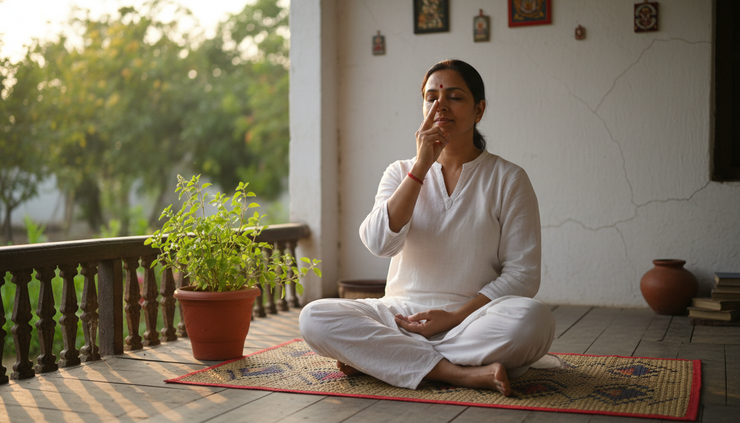
Practise nadi shodhana for balance
Nadi shodhana, or alternate nostril breathing, is widely used to settle the mind.
A simple practice:
Sit comfortably with the spine upright.
Close the right nostril and inhale through the left.
Close the left nostril and exhale through the right.
Inhale through the right.
Close the right nostril and exhale through the left.
Continue for 3 to 5 minutes.
Keep the breath smooth and easy. Stop if there is dizziness, discomfort, or strain.
Use bhramari when the mind feels loud
Bhramari, or humming bee breath, creates a soft vibration that can calm mental noise.
Try this:
Sit comfortably.
Inhale gently through the nose.
Exhale with a low humming sound.
Repeat for 5 to 7 rounds.
This can be useful before sleep or after a tense conversation. Keep it gentle. The sound should feel soothing, not forced.
Build a short meditation habit
Meditation does not need to be long. A stable 5-minute practice is better than an occasional 45-minute effort that feels impossible to repeat.
Try this simple method:
Sit comfortably.
Notice the breath at the nostrils.
When thoughts appear, name them softly as “thinking”.
Return to the breath.
End by placing one hand on the heart and one on the belly.
This trains the mind to return. That skill is the core of emotional regulation.
Better emotional regulation supports the whole person
When emotions become easier to regulate, daily life changes in practical ways.
Sleep may improve because the mind is not replaying every stressor at night. Digestion may feel steadier because meals are calmer and routines are more regular. Relationships may become less reactive because there is more space before speaking. Work and study may feel clearer because the mind spends less energy fighting itself.
Ayurveda also highlights self-trust. When a person learns to notice, “This is Vata rising” or “My Pitta is overheated today,” emotions become information rather than identity. Anger becomes a signal to cool down. Anxiety becomes a signal to ground. Heaviness becomes a signal to move, lighten, and reconnect.
This shift is powerful. It reduces shame. It makes care more specific.
Emotional balance does not mean feeling calm every minute. It means recovering sooner, choosing more wisely, and treating the body as an ally.
A simple Ayurvedic day for emotional balance
A useful Ayurvedic routine can be simple enough to repeat on an ordinary working day.
Morning can begin with warm water, tongue cleaning, natural light, and 5 minutes of quiet breathing. If time allows, add a short oil massage before bathing.
Breakfast can be warm and easy to digest, such as porridge with cardamom, stewed apple, or lightly spiced poha. Lunch can be the main meal, with dal, rice or roti, vegetables, and a small amount of ghee if suitable. Dinner can be lighter and earlier, such as soup, khichdi, or cooked vegetables.
During the day, pause before reacting. Take three slow breaths before replying to a difficult message. Step away from heated conversations when possible. Drink warm water or herbal tea instead of leaning on repeated caffeine.
Evening can include a short walk, reduced screen exposure, gentle stretching, journalling, or bhramari. Sleep works best when the body receives the same message each night: the day is complete, and it is safe to rest.
A small routine repeated daily often supports the mind more than an intense routine followed once a month.
Let Ayurveda become a practice of listening
Ayurveda offers a compassionate map for emotional health. It asks us to notice patterns, respect digestion, follow natural rhythms, and choose practices that match the state of the body and mind.
Start with one change. Eat a warm dinner for a week. Practise alternate nostril breathing each morning. Massage the feet before bed. Replace one rushed meal with a quiet one. Watch what changes.
The path to calm does not need to be dramatic. In Ayurveda, balance is built through small acts of care, repeated with attention. Over time, those acts teach the mind a new skill: how to return to steadiness.


Comments