

Virudha Ahar in Ayurveda: Incompatible Food Combinations and Healthy Eating Tips

A meal can be made of good ingredients and still feel heavy, sour, bloating, or dull afterwards. Ayurveda explains this through the idea of virudha ahar, or incompatible food. The focus is not only on what we eat, but also on what we combine, when we eat it, how it is cooked, and whether it suits our digestion.
In simple terms, virudha ahar refers to food combinations or eating habits that may disturb digestion and create imbalance in the body. Ayurveda links such habits with poor `agni`, the digestive fire, and the formation of `ama`, often described as undigested or poorly processed residue.
This does not mean every traditional rule must be followed blindly. Food tolerance varies from person to person. Still, the concept offers a useful way to think about everyday eating, especially when meals leave you feeling uneasy, sluggish, acidic, or bloated.

What virudha ahar means in Ayurveda
Ayurveda sees food as more than calories, protein, carbs, and fats. Each food has qualities. It may be hot or cold, light or heavy, dry or oily, sharp or mild. It may digest quickly or slowly. It may suit one season but feel wrong in another.
Virudha ahar, often spelt viruddha ahara, is food that becomes unsuitable because of one or more of these factors:
Wrong combination
Two foods may have opposite qualities or different digestion times.
Wrong preparation
A food may become unsuitable when overheated, reheated, fermented, or cooked in a harmful way.
Wrong quantity
Even wholesome foods can disturb digestion when eaten in excess or in an unsuitable ratio.
Wrong time
Some foods are better eaten in daylight, some are lighter for dinner, and some are not ideal during certain seasons.
Wrong individual fit
A person with weak digestion, acidity, allergies, or a sensitive gut may react differently from someone with strong digestion.
The central idea is simple: food should support digestion, not confuse it. When digestion works well, the body feels lighter, energy stays steadier, and appetite returns naturally at the next meal. When digestion struggles, even healthy food can feel like a burden.
Ayurveda gives special importance to `agni`. A strong and balanced agni digests food well. A weak or disturbed agni may lead to heaviness, gas, coated tongue, bad breath, dull skin, low energy, irregular appetite, or disturbed bowel habits. These signs can have many causes, so they should not be self-diagnosed. Still, they can be useful signals to review food habits.
This article is for general information and education only. For ongoing digestive problems, allergies, chronic illness, pregnancy-related diet questions, or medication-related concerns, speak with a qualified healthcare professional.
Common incompatible food combinations to know
Many virudha ahar examples come from classical Ayurvedic texts and long-standing food traditions. Some may not match modern nutrition categories perfectly, but they are still practical to understand through digestion, timing, and tolerance.
The table below lists common combinations and how Ayurveda explains their possible effects.
Incompatible combination | Why Ayurveda cautions against it | Possible effect on digestion and well-being |
Milk with fish | Milk is considered cooling and nourishing, while fish is heavier and heating in nature | Heaviness, skin flare-ups in sensitive people, sluggish digestion |
Milk with sour fruits | Sour fruits can curdle milk and may disturb digestion | Acidity, bloating, sour burps, discomfort |
Milk with banana | Both are heavy and sweet, and may slow digestion for some people | Mucus-like heaviness, bloating, dullness after eating |
Milk with salty foods | Milk and salt are traditionally seen as incompatible | Digestive unease, heaviness, disturbed gut comfort |
Curd with fish or meat | Curd is sour, heavy, and heating, while animal proteins are also heavy | Sluggish digestion, acidity, bloating |
Curd at night | Curd is heavy and sour, and night digestion is often slower | Congestion, heaviness, acidity in some people |
Fruit with a heavy cooked meal | Fruit digests faster than grains, pulses, and fried foods | Fermentation-like discomfort, gas, bloating |
Melons with other foods | Melons are watery and digest quickly | Bloating or cramps when eaten after a heavy meal |
Heated honey | Ayurveda strongly cautions against cooking or heating honey | Irritation, digestive discomfort, loss of honey’s natural quality |
Equal amounts of honey and ghee | Equal quantities by weight are traditionally considered incompatible | Heaviness and digestive imbalance |
Tea with meals | Tea can reduce appetite and may affect nutrient absorption when taken with food | Reduced digestive comfort, gas, poor appetite |
Ice-cold drinks with hot meals | Cold drinks may dampen digestive fire during meals | Sluggish digestion, heaviness, cramps in sensitive people |
Reheated oils or repeatedly fried foods | Oil changes quality when overheated again and again | Acidity, heaviness, sluggishness, poor post-meal energy |
These combinations do not affect everyone in the same way. A person with strong digestion may not notice much after a banana milkshake once in a while. Someone with acidity, sinus congestion, skin issues, or a sensitive gut may feel the impact quickly.
The aim is not fear. The aim is awareness.

Why these combinations may disturb digestion
Ayurveda explains food incompatibility through qualities, digestion time, and the effect on `doshas`, mainly Vata, Pitta, and Kapha. Modern readers may understand it through a few practical ideas.
Foods digest at different speeds
Fruit usually digests faster than grains, pulses, dairy, fried food, or meat. When fruit is eaten after a heavy meal, it may sit longer in the stomach than it needs to. This can lead to gas, bloating, sourness, or discomfort in some people.
That is why Ayurveda often recommends eating fruit alone, preferably as a snack or before a meal, not as a dessert after a large lunch.
Heavy foods can overload a weak appetite
Milk, curd, paneer, meat, fried snacks, sweets, and rich gravies can all be heavy. Eating several heavy foods in one meal may overwhelm digestion.
For example, a meal of butter naan, paneer gravy, curd, sweets, and a cold drink may taste satisfying but leave the body tired. This does not mean paneer or curd is bad. It means the full meal may be too dense.
Hot and cold qualities can clash
Ayurveda looks at foods as heating or cooling in effect. Fish, sour curd, fermented foods, and spicy foods tend to be heating. Milk is cooling and nourishing. Pairing foods with very different qualities may disturb balance, especially when digestion is weak.
Ice-cold water with a hot, oily meal is another common example. It may reduce digestive comfort and make the meal feel heavier.
Processing changes food quality
Honey is valued in Ayurveda, but heating it is discouraged. That includes mixing honey into boiling water, baking with it, or cooking it into sauces. If using honey, add it only once the drink or food is warm enough to sip comfortably, not piping hot.
Repeatedly heated oil is another concern. Many Indian snacks are deep-fried, and reused oil is common in some settings. From a broader health view, repeatedly heated oil is best limited. It can make food heavy and may not support long-term well-being.
Timing affects how food behaves
Curd is a good example. Fresh curd can suit many people at lunch, especially when taken as thin chaas with roasted jeera. At night, thick curd may feel heavy and may worsen congestion, acidity, or sluggishness in sensitive people.
Ayurveda pays attention to time because digestion is usually stronger during the day and slower late at night.
How to avoid incompatible combinations in daily meals
Avoiding incompatible foods does not require a strict or joyless diet. Most changes are small. The easiest method is to build meals that are simple, warm, fresh, and suited to appetite.
Keep fruit separate from main meals
Eat fruit as a standalone snack, ideally mid-morning or early evening. Avoid mixing fruit with milk, curd, heavy cereals, fried snacks, or large meals.
Better options include:
Papaya on its own
Guava as a separate snack
Apple or pear between meals
Melon by itself, not after lunch
Banana alone, instead of in a milkshake
If fruit with yoghurt suits you and causes no discomfort, keep the portion small and observe your body. Ayurveda would still advise caution, especially with sour fruits and dairy.
Treat milk as a separate mini-meal
Milk is nourishing but heavy. It generally works best alone or with compatible spices such as turmeric, cardamom, saffron, or a little dry ginger, depending on tolerance.
Try to avoid milk with:
Fish
Meat
Salty snacks
Sour fruits
Fermented foods
Heavy fried food
Warm milk at night may suit some people, while others feel mucus, heaviness, or acidity. Personal response matters.
Shift curd to lunch
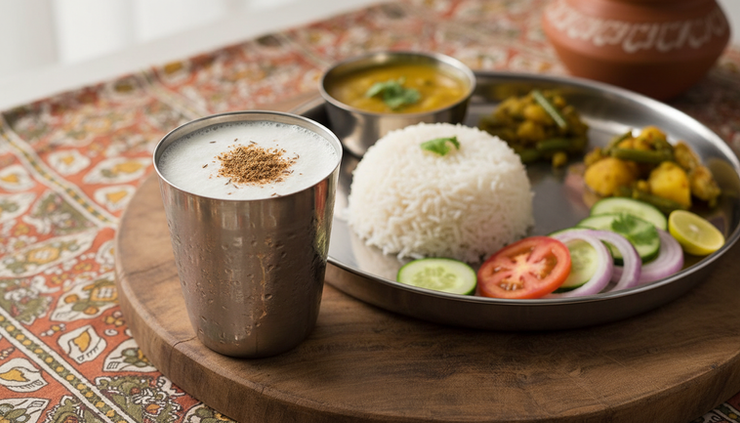
If curd is part of daily meals, lunch is usually the better time. Make it lighter by turning it into chaas.
A simple chaas can include:
Fresh curd
Water
Roasted cumin powder
A pinch of rock salt
Fresh coriander, if suitable
Avoid thick curd with dinner, especially during cold weather, cough, sinus congestion, or acidity.
Do not mix too many heavy foods
A balanced Indian meal can be satisfying without being overloaded. Choose one main heavy item rather than stacking many.
For example, instead of eating paneer butter masala, fried puri, curd, sweet lassi, and gulab jamun in one meal, make the plate lighter:
Paneer sabzi with phulka
Cooked vegetable on the side
Small salad if it suits digestion
Warm water or jeera water
Sweet dish later, not immediately after a full meal
This kind of spacing helps digestion without removing favourite foods completely.
Let honey stay raw and gentle
Avoid adding honey to boiling tea, hot kadha, or food while cooking. Let the drink cool until it is warm, then add honey.
Also avoid taking honey and ghee in equal quantities by weight. Small amounts used separately in appropriate foods are different from mixing equal portions daily as a habit.
Choose warm or room-temperature drinks with meals
Ice-cold drinks may feel refreshing, especially in summer, but they can make oily or heavy meals harder to digest. Sip warm water, room-temperature water, jeera water, ajwain water, or thin buttermilk at lunch if suitable.
This is especially useful after foods like rajma, chole, paratha, pakora, biryani, or rich gravies.
Eat seasonal and fresh as often as possible
Freshly cooked food is central to Ayurvedic eating. Leftovers are common in busy homes, and they are not always avoidable. Still, avoid repeatedly reheating the same dish or keeping cooked food for too long.
A simple rule helps: cook what can be finished with minimal leftovers, and reheat only once when needed.
Watch your own signs
Ayurveda is deeply individual. A food rule becomes more useful when linked with observation.
After meals, notice:
Do you feel light or sleepy?
Is there bloating or gas?
Do you get acidity or sour burps?
Does your nose feel blocked after dairy?
Is your appetite clear at the next mealtime?
Do certain combinations trigger skin or gut discomfort?
Keep a simple food diary for one or two weeks if needed. Patterns often become clear.
A practical day of eating without common clashes
Here is a simple example of how compatible eating can look in an Indian routine. Adjust portions, ingredients, and spices based on hunger, season, and personal needs.
Morning
Start with warm water. If hungry, have soaked almonds or a small bowl of poha, upma, idli, or dalia. Keep fruit separate if you want it later.
Mid-morning
Eat one type of fruit on its own. Papaya, apple, guava, pomegranate, or seasonal fruit can work well. Avoid fruit chaat loaded with curd, milk, and heavy toppings.
Lunch
Make lunch the main meal when digestion is usually stronger. A balanced plate may include rice or roti, dal or beans, cooked sabzi, a small amount of ghee, and salad if it suits you. If taking curd, have it as thin chaas rather than thick curd.
Evening snack
Choose roasted makhana, murmura chivda, a small bowl of sprouts if tolerated, herbal tea, or a light homemade snack. Avoid mixing fruit with tea, milk, fried foods, and sweets.
Dinner
Keep dinner warm, cooked, and lighter than lunch. Khichdi, vegetable dal soup, soft phulkas with sabzi, or light millet preparations can work well. Skip curd at night if it causes heaviness.
Before bed
If warm milk suits you, take it plain or with a gentle spice such as cardamom or turmeric. Avoid pairing it with salty snacks, sour fruit, or a heavy dessert.

Healthy eating tips that go beyond food combinations
Virudha ahar is one part of healthy eating. The way food is eaten also matters.
Eat with attention, not while rushing. Chew well. Leave some space in the stomach instead of eating until heavy. Try to keep meal timings steady. Avoid sleeping right after lunch or dinner. Give the body enough time between meals so the previous meal can digest.
Spices can also support digestion when used wisely. Cumin, ajwain, ginger, black pepper, fennel, coriander, and hing are common in Indian kitchens for a reason. They can make dals, beans, and vegetables easier to digest. Use them according to taste and tolerance, especially if there is acidity or heat sensitivity.
Most of all, avoid turning food into stress. A relaxed mind supports digestion too. If an incompatible combination happens once at a wedding, festival, or family meal, return to simple eating at the next meal. Consistency matters more than perfection.
The key takeaway
Virudha ahar in Ayurveda teaches a practical lesson: healthy eating is not only about choosing “good” foods. It is also about combining them wisely, cooking them well, eating them at the right time, and listening to the body’s response.
Start with the most common changes. Eat fruit separately. Avoid milk with sour, salty, fish, or meat-based foods. Keep curd mostly for lunch. Do not heat honey. Choose warm, fresh meals more often. These small habits can make digestion feel lighter and meals more supportive.
Food should leave the body clear, steady, and satisfied. When meals begin to do that more often, the idea of virudha ahar becomes less like a rulebook and more like common sense at the dining table.


🪴